
USMCA After the Review: What Annual Check-ins Mean for Your Cross-Border Freight
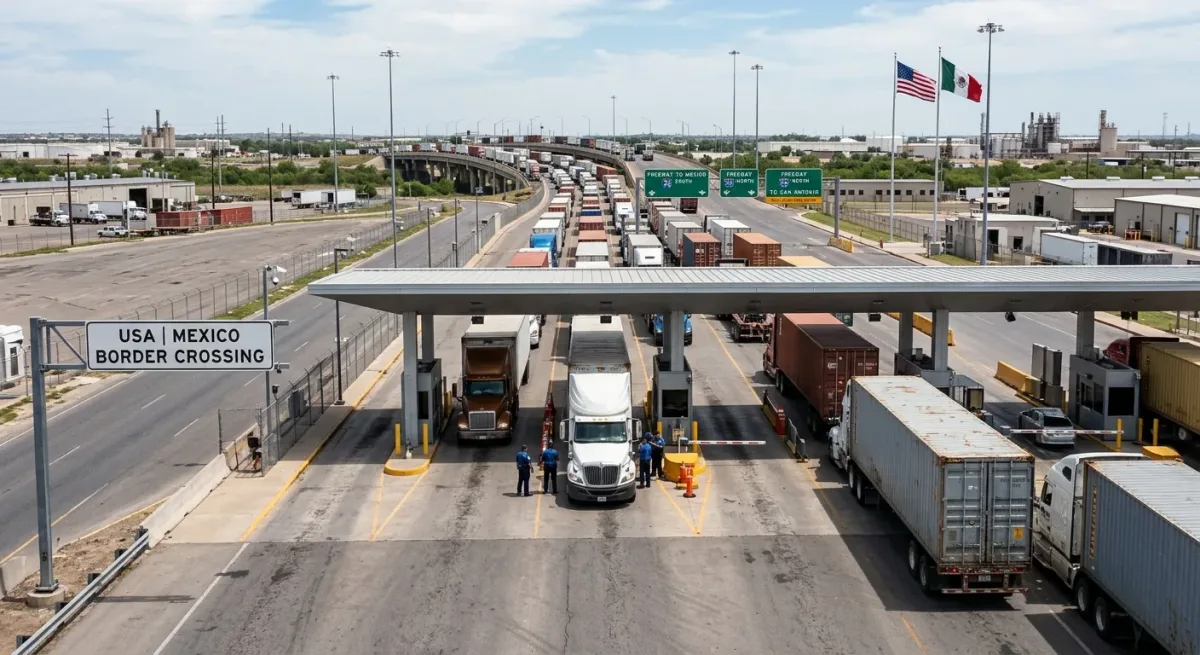
For six years, the USMCA was the kind of trade agreement shippers didn’t have to think about. It worked quietly in the background. Trucks crossed at Laredo, El Paso, and Otay Mesa, goods qualified for duty-free treatment, and logistics teams focused on rates, capacity, and transit times.
That changed on July 1, 2026. At the agreement’s first mandatory joint review, the United States stated it did not agree to renew the USMCA in its current form, while Mexico and Canada backed a new 16-year term.
The result is not a collapse, and it is not business as usual either. It is something in between: an agreement that remains fully in force but is now reopened every single year. For any company moving freight between the U.S. and Mexico, that shift deserves a place in your 2027 planning.
Here is what actually happened, what hasn’t changed, where the real risk sits, and what you can do about it now.
How the review works, and what changed
Unlike NAFTA, the USMCA was built with a checkpoint. Under Article 34.7, the agreement has a 16-year term running through July 1, 2036, and the three countries had to hold a joint review on its sixth anniversary to decide whether to extend it for another 16 years.
If all three had confirmed, the clock would have reset and the agreement would have run comfortably into the 2040s. Because the U.S. did not confirm, a fallback clause kicked in. Now the Free Trade Commission must hold a joint review every year for the rest of the term. Each annual review becomes a new decision point on extension.
The key dates to put on your calendar:
|
Date |
Milestone |
|---|---|
|
July 1, 2026 |
First joint review; U.S. declines to confirm extension |
|
May–July 2026 |
Three U.S.–Mexico bilateral negotiating rounds |
|
July 1, 2027 |
|
|
Every year to 2036 |
Annual reviews continue unless all three agree to extend |
|
July 1, 2036 |
Agreement expires if no extension is confirmed |
Two details matter for shippers. First, the parties can still agree to a 16-year extension at any time before expiry, without a formal renegotiation. Second, much of the real negotiating is happening bilaterally, not in a three-way room. The U.S. and Mexico held their third bilateral round in Mexico City starting July 21, and in September Presidents Trump and Sheinbaum spoke by phone as talks continued. Canada, by contrast, had not begun substantive text-based negotiations with the U.S. as of the July review.
What stays the same for your freight today
The most important message for operations teams is simple: nothing on the ground has changed yet. The USMCA remains fully in effect, and preferential tariffs, rules of origin, investment protections, and dispute settlement all still apply.
In practical terms, that means:
-
Qualifying goods still cross duty-free. If your products meet USMCA rules of origin today, they keep their preferential treatment.
-
Certification works the same way. The agreement doesn’t require a specific certificate of origin form; exporters or importers can self-certify in any format that includes the required data elements.
-
Trucking remains the backbone of the trade. In 2024, road freight carried more than 70% of Mexico–U.S. trade by value. The lanes, crossings, and carriers you rely on are still running.
So there is no reason to reroute freight or rewrite customs procedures next week. The change is in the planning horizon, not in Monday’s dispatch board.
Where the real risk sits
If the rules haven’t changed, why should a shipper care? Because the agreement has gone from a 16-year certainty to a 12-month one. Three areas deserve attention.
1. Rules of origin could tighten
The U.S.–Mexico rounds have covered automotive rules of origin, steel and aluminum, economic security, labor, and environment. Industry reporting describes U.S. proposals to raise automotive regional value content from 75% toward 82%, add a U.S.-content requirement, and limit non-North American capital in qualifying supply chains. These are proposals, not law. But if your product barely qualifies today, a few percentage points could change your landed cost.
2. Long contracts now carry policy risk
A five-year warehouse lease, a dedicated fleet agreement, or a new distribution center near the border was easier to justify when the trade framework was locked in. The Canadian Trucking Alliance has warned that annual reviews create structural problems for long-term investment. That doesn’t mean you should stop investing. It means your contracts should include review points and exit options.
3. Tariffs outside the agreement still bite
USMCA treatment doesn’t shield everything. Section 232 tariffs on steel and aluminum of up to 50% remain in place and are part of the bargaining in both bilateral tracks. If your bill of materials includes metal content, track those measures separately from the USMCA headlines.
Add a tight freight market on top. ACT Research reports capacity tightening early ahead of the 2026 holiday season, with record diesel prices keeping pressure on rates. Policy uncertainty plus expensive capacity is exactly when a reliable cross-border partner pays for itself.
A practical action plan for shippers
You don’t need a trade lawyer on retainer to prepare. You need a short routine that turns annual reviews into a planned event instead of a surprise.
-
Audit origin at the product level. List the SKUs that move under USMCA preference and check how much margin each has above the current threshold. Flag anything that would fail at a higher content requirement.
-
Keep certification files audit-ready. Negotiations tend to bring closer scrutiny of origin claims. Make sure supplier declarations and bills of materials are current.
-
Build break points into long contracts. For leases, dedicated capacity, and multi-year rate agreements, add a review clause tied to the July annual review.
-
Diversify crossings and modes. Changes are most likely to hit the U.S.–Mexico corridor first, so having more than one port of entry and mode option gives you room to adjust.
-
Put July 1 on the calendar every year. Assign someone to follow each annual review and both bilateral tracks, and share a one-page update with procurement and logistics.
-
Talk to your carrier now, not in June. Your logistics partner sees what’s happening at the border every day. Ask how they would reroute, re-document, or reprice if rules shift.
None of these steps is expensive. Together, they turn a vague policy risk into a checklist your team can own.
The bottom line
The USMCA didn’t end on July 1, 2026. It changed character. A trade framework that once felt permanent now gets a yearly checkup, and the details that matter most to shippers, like rules of origin, content thresholds, and tariffs on inputs, are all on the table.
The companies that come out ahead won’t be the ones that guessed the outcome. They’ll be the ones with clean documentation, flexible contracts, and a logistics partner who can adapt as fast as the rules do.
Move your cross-border freight with a partner who reads the fine print
At CT Incorporated, cross-border freight is what we do every day. We move loads between the United States, Mexico, and Central America, and we coordinate the details that keep them moving: documentation, customs brokers, border crossings, and real-time tracking.
When trade rules shift, you need more than a truck. You need a team that knows what changed, what it means for your lanes, and how to keep your freight compliant and on schedule.
Planning your 2027 freight? Contact CT Incorporated for a cross-border quote, and let’s build a shipping plan that’s ready for whatever the next review brings.